Before our Orientation and Mobility Practitioner arrives in a new area, a local person has already done something extraordinary.
They have walked through their community, spoken to neighbours, and asked a simple question: “do you know anyone who is blind”? They have written down names, sometimes ID numbers, phone numbers, and addresses. They have shared this with us: mostly on a WhatsApp message, or on a handwritten A4 page with columns drawn carefully with a ruler. Sometimes on a scrap of paper.
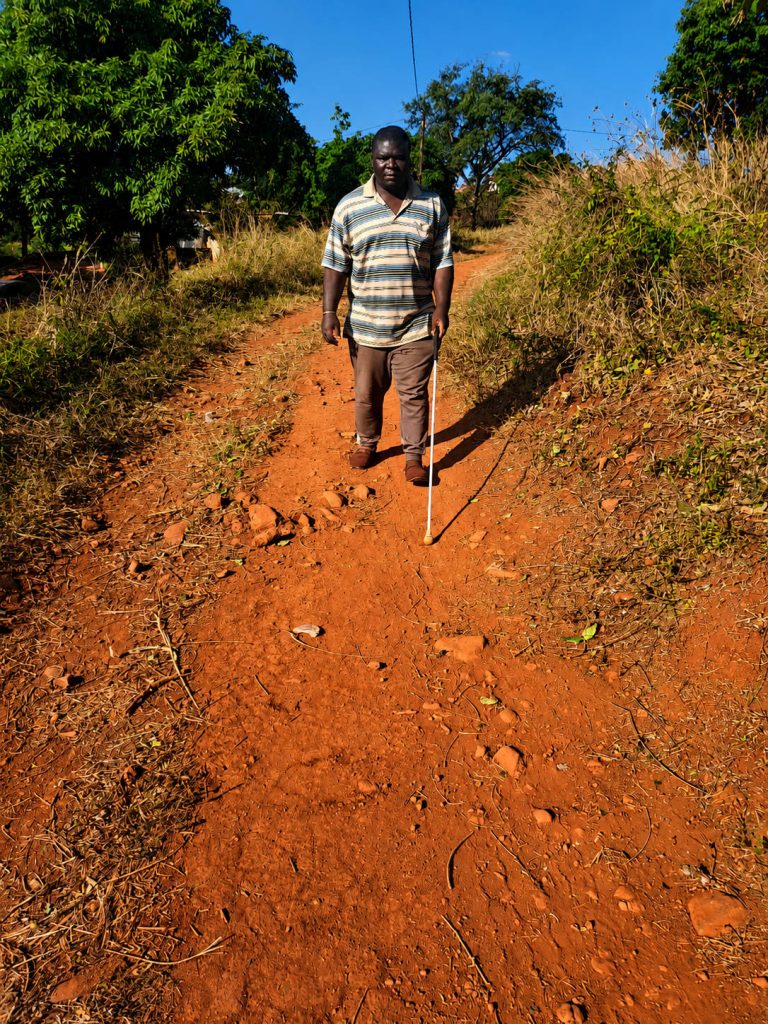
This local person can be a community health worker, a blind person we have previously trained, a nurse or social worker, a disability centre volunteer… In short, an ordinary person who knows their area and cares about the blind people in it. They are not paid by SAMBT. They are local contact people, and without them, we would not know where to go.
Their lists of names of blind people, are how we schedule training programmes across all nine Provinces. They are how our Practitioner knows where to drive during those first days in a new area, to find the people who have been waiting for her arrival with hope in their hearts.
Behind every line on every list is a person who is blind, often living in a remote area, waiting for our O&M Practitioner to come, to show them that they have not been forgotten, and that there is life after sight loss.
South Africa is a big country with over 2 million blind people. The blind people who need independence training are often hidden at home in rural areas, sometimes without an ID document, not registered anywhere. Our contact people find them.
We are deeply grateful to every person who has ever handed us a list of names of blind people in need of O&M training: whether you are in Kagung in Northern Cape, or GaMphahlele in Limpopo, Grabouw in the Western Cape or Ezakheni in KZN. We want to thank you!


